Architecture Review
Assess a supported optimistic-rollup framework and its current operational assumptions.

Optimistic rollup development and integration with explicit sequencing, data publication, fault-proof and withdrawal responsibilities.
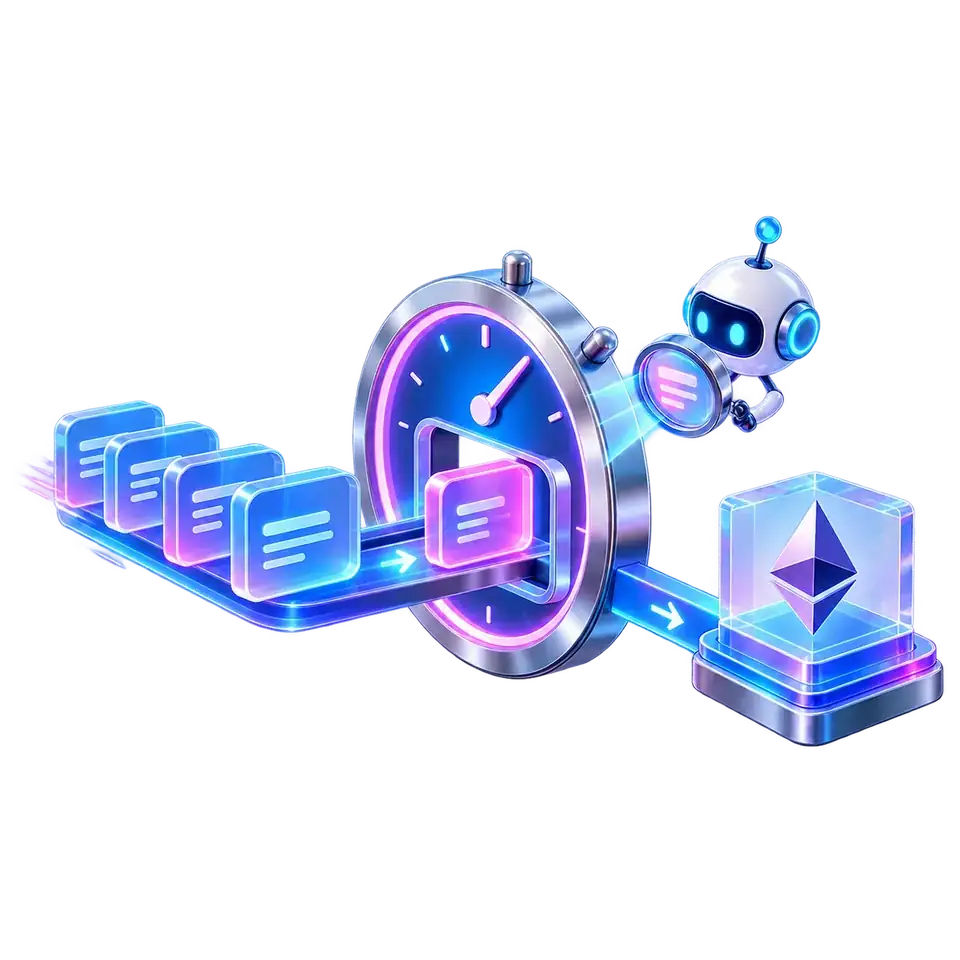
A simplified journey; exact steps depend on the selected protocol.
Order and execute transactions
Submit the required data and claim
Allow the supported dispute process
Complete the relevant settlement step
Review application needs and the chosen framework's assumptions.
Specify sequencing, publication and challenge responsibilities.
Implement configuration, integrations and operator interfaces.
Test disputed claims, delayed submissions and withdrawal states.
Deploy with monitoring, upgrade procedures and support documentation.
Assess a supported optimistic-rollup framework and its current operational assumptions.
Configure the required execution environment and application interfaces.
Define transaction ordering, service access and response to sequencing interruptions.
Connect batch data and settlement submissions with monitored operational services.
Integrate the supported fault-proof workflow and document monitoring responsibilities.
Make proving, waiting and finalization stages understandable to users.
A quick execution response is different from a finalized withdrawal. The interface and support team need to explain the selected protocol's stages without promising one universal settlement time.
How are state claims submitted and checked?
Who monitors and acts on disputed claims?
How can required data be obtained?
What withdrawal and interruption flows are supported?
Scope dedicated execution for compatible applications.
Connect products to supported optimistic-rollup systems.
Improve monitoring and incident response around the stack.
Build clear multi-stage asset movement journeys.
We choose the implementation tools after confirming the architecture and integrations.
Protocol withdrawals can involve a challenge period and additional steps. Timing depends on the chosen system and route.
No. Protocol dispute mechanisms and independent code review serve different purposes.
A proven framework is usually evaluated first. New protocol research requires a separately scoped engineering and security program.

Tell us what you want to build. We’ll help define the next practical step.