Runtime Architecture
Define storage, dispatchable calls and module boundaries around the application's required state transitions.

Substrate chain development for FRAME pallets, runtime testing, node integration and maintainable chain upgrades.
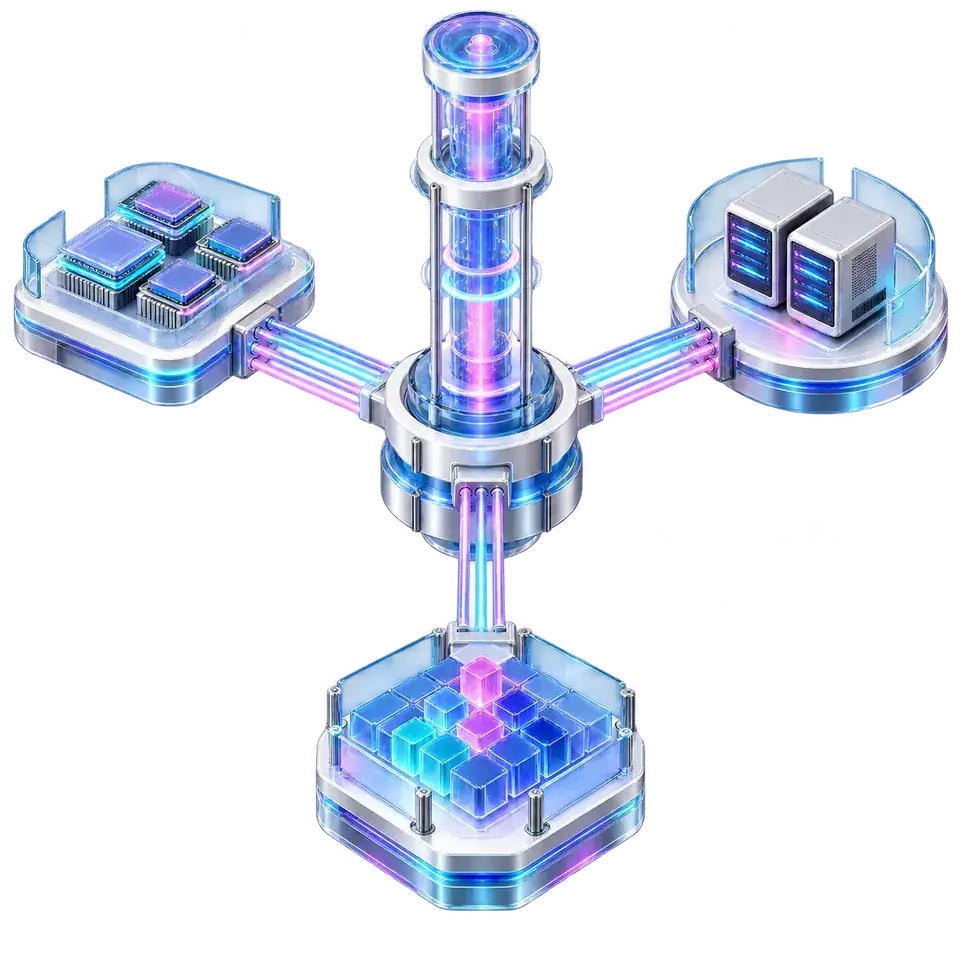
Define storage, dispatchable calls and module boundaries around the application's required state transitions.
Build focused custom pallets with permission checks, event outputs and tests for invalid as well as valid inputs.
Connect runtime functionality to application queries, transaction submissions and selected operational tooling.
Rehearse storage migrations and compatibility changes using representative state before approving a runtime release.
A chain template is only a starting point. We translate the product's rules into runtime storage, calls and permissions, then test those rules independently from the user interface. Deployment topology and consensus choices are agreed separately so the runtime is not confused with a complete operating network.
Evaluate deployment and security requirements explicitly; using SDK components does not automatically make a chain a parachain.
Document state invariants and API compatibility so a runtime change does not silently break applications.
Implement product rules that need dedicated runtime calls and controlled state transitions.
Add a narrowly scoped capability to an established runtime without rebuilding unrelated modules.
Review tests, benchmarks and migration behaviour for a chain preparing its next release.
We choose the implementation tools after confirming the architecture and integrations.
Define the runtime's roles, state and permitted transitions.
Choose existing pallets and isolate the custom logic.
Implement calls, storage and application integration in a test network.
Test permissions, weights and storage migrations.
Document the runtime release and its operating dependencies.
Substrate components are developed within the Polkadot SDK ecosystem. We select a compatible SDK release and document the dependencies used for the project.
No. Security and deployment depend on the chosen architecture. A standalone chain and a parachain have different operating requirements that must be assessed.
Tell us what you want to build. We’ll help define the next practical step.