Solana Programs
Develop program instructions and account structures around explicit product rules.

Solana blockchain development for programs, token integrations, infrastructure and product backends, with testing and operational planning from Aeko Soft.
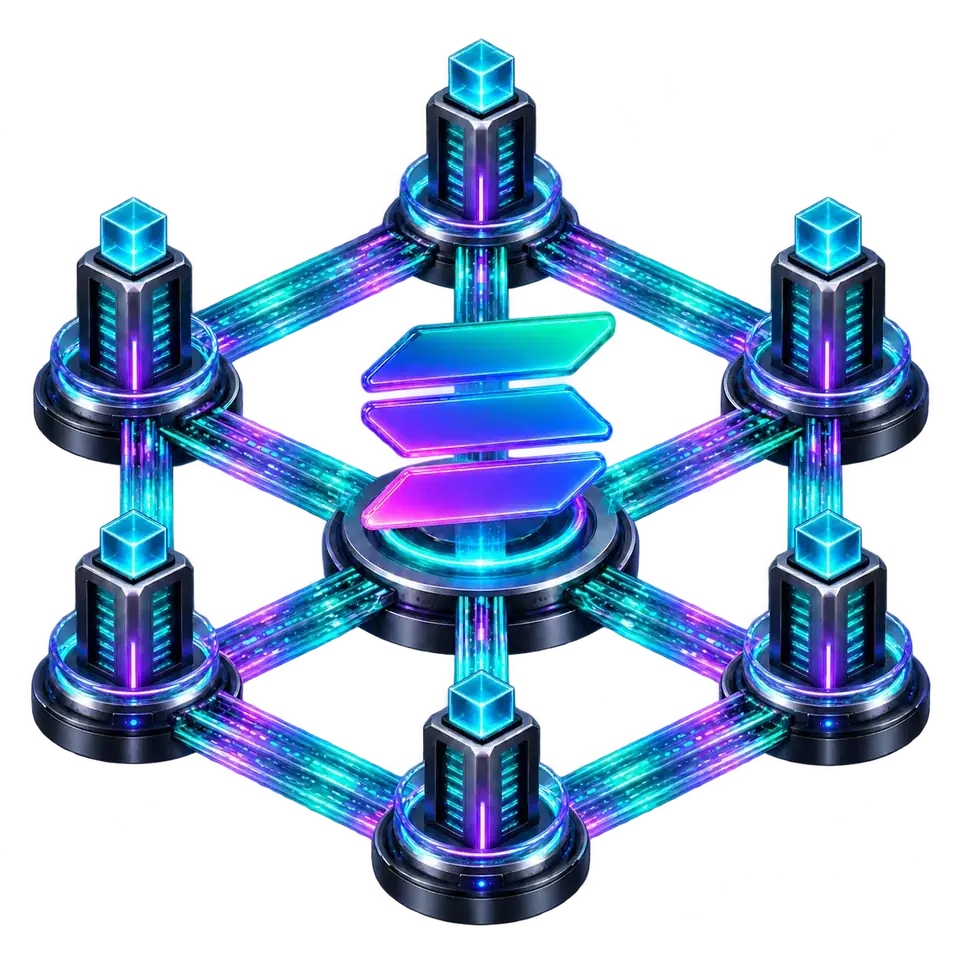
Develop program instructions and account structures around explicit product rules.
Connect mint, account and transfer workflows using suitable Solana token tooling.
Build services that interpret network activity and expose useful application state.
Support transaction signing, connection recovery and clear user-facing statuses.
Define RPC dependencies, confirmation handling and monitoring for production operation.
Test authority checks, account constraints and invalid instruction paths before release.
We choose the implementation tools after confirming the architecture and integrations.
Solana programs and the accounts they operate on need to be designed together. We document ownership, signer requirements, storage responsibilities and transaction composition early. That gives frontend and backend teams a shared model for implementation and testing.
Which accounts store state, and which program owns them?
Who can initialize, update or close product-specific accounts?
How will the interface handle pending, rejected or expired submissions?
What does the application do when an RPC dependency is unavailable?
Create issuance and asset-management experiences.
Connect responsive interfaces to on-chain actions.
Turn program events and account state into application views.
Develop product-specific workflows around digital ownership.
Define program responsibilities and map the account relationships.
Prototype core instructions and wallet interactions on a test environment.
Build the program, backend and transaction-state interface together.
Exercise invalid accounts, authority failures and provider interruptions.
Deploy with configuration records, observability and operating instructions.
This service emphasizes programs, account architecture and supporting infrastructure. A dApp engagement adds the complete customer-facing application and its user journeys.
Yes. We review their interfaces, authorities and dependencies before planning an integration. Compatibility and security assumptions must be checked rather than assumed.
No. Network conditions, instruction design and infrastructure choices affect results. We benchmark the specific workflow instead of promising universal numbers.
Tell us what you want to build. We’ll help define the next practical step.