Platform-Specific UX
Use navigation and interaction patterns familiar to each operating system.

Native mobile app development for platform-specific experiences, device integration and carefully tested application behaviour.
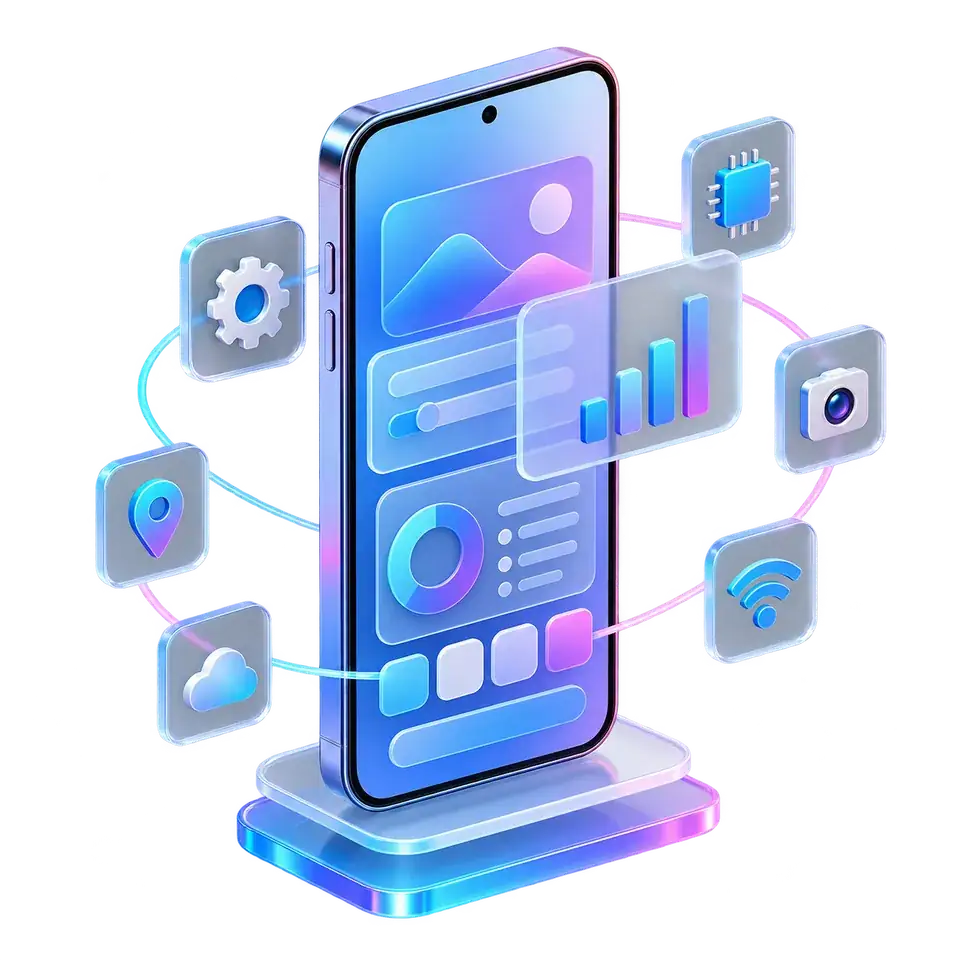
Use navigation and interaction patterns familiar to each operating system.
Integrate required platform features with narrow, contextual permissions.
Investigate rendering, startup and resource use on supported hardware.
Maintain platform-specific build, signing and update procedures.
We choose the implementation tools after confirming the architecture and integrations.
Native development is valuable when the product benefits from close integration with its platform. We assess those needs first, then build interfaces and background behaviour that respect the operating system's conventions. Shared backend rules remain central even when Android and iOS use separate client implementations.
Compare required device capabilities with the cost of maintaining separate clients.
Keep API behaviour and business rules consistent across platform implementations.
Support workflows that depend on selected platform capabilities.
Refine platform-specific interaction and performance.
Extend a working client without replacing its established architecture.
Identify the capabilities that justify native delivery.
Design platform-specific journeys and shared APIs.
Implement clients with explicit lifecycle behaviour.
Profile and test representative devices.
Release through controlled platform-specific pipelines.
No. The right choice depends on device requirements, user experience and maintenance capacity. We make the trade-off explicit rather than treating one approach as universally superior.
Yes. A well-defined API can serve both clients while each platform retains its own interface and lifecycle implementation.
Tell us what you want to build. We’ll help define the next practical step.