dApp Product Design
Map user goals, signing steps and transaction states before building screens.

Custom dApp development combining smart contracts, wallet connections, web interfaces and backend services. Build a clear, reliable decentralized user experience.
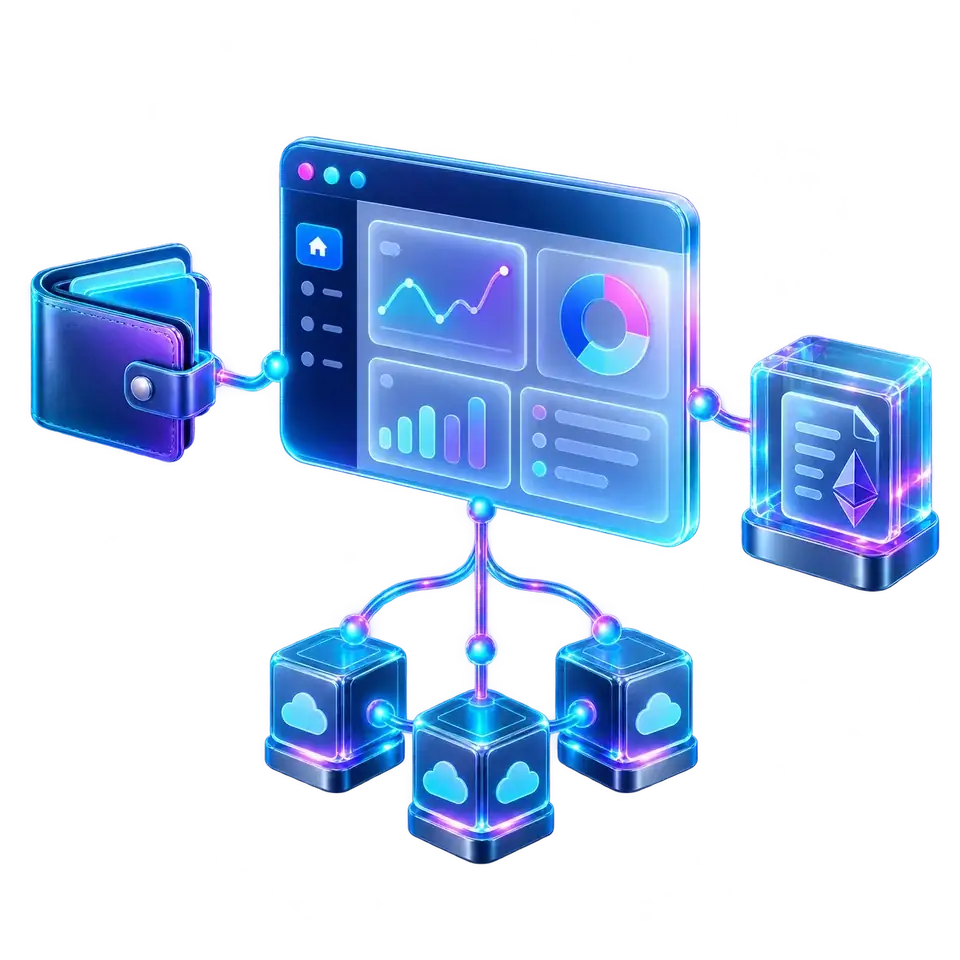
Map user goals, signing steps and transaction states before building screens.
Implement application rules with tested roles, asset handling and event design.
Handle connections, account changes, network selection and transaction approvals clearly.
Build responsive interfaces that remain useful while network operations are pending.
Connect blockchain events with search, notifications and application services.
Prepare error reporting, dependency updates and operational runbooks for the deployed product.
We choose the implementation tools after confirming the architecture and integrations.
Most dApps combine several kinds of infrastructure. We make those boundaries visible and design the complete journey, not just the wallet button.
Identify which records live on-chain and which belong in application storage.
Explain signatures, approvals and transaction effects before confirmation.
Account for RPC failures, stale data and interrupted browser sessions.
Separate operator controls from ordinary user permissions.
Connect membership, governance and participation experiences.
Create issuance, ownership and transfer workflows around supported assets.
Link verifiable on-chain events to practical customer-facing services.
Support gated content, collectibles and direct community interaction.
Define user journeys and decide where decentralization adds a concrete benefit.
Design contract interfaces, data flows and wallet interactions as one system.
Build the frontend, contracts and supporting services in tested increments.
Verify permissions, transaction failures, accessibility and mobile behavior.
Launch with monitoring, documentation and a plan for dependency maintenance.
Not necessarily. Interfaces, hosting, indexing and support services may use conventional infrastructure. We document these dependencies rather than imply they disappear.
Wallet requirements depend on the feature. Browsing may work without one, while signing transactions or proving ownership generally requires a supported wallet flow.
Yes. APIs and event-processing services can connect blockchain activity with existing business systems, provided the data and trust boundaries are designed carefully.
Tell us what you want to build. We’ll help define the next practical step.