Protocol Baseline
Review the licensed upstream and required modifications.

Blockchain fork engineering for protocol configuration, genesis planning, node compatibility and coordinated network rollout.
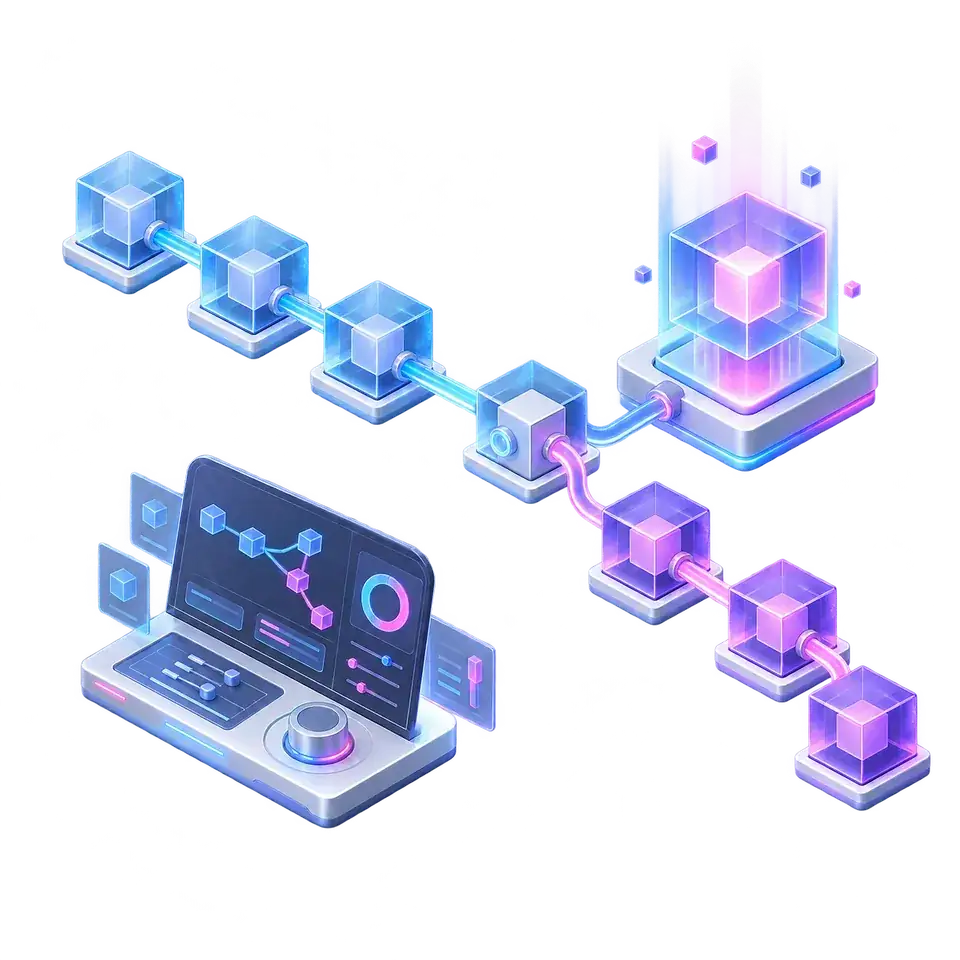
Review the licensed upstream and required modifications.
Define chain identity, genesis and bootstrapping settings.
Test compatibility, recovery and operator procedures.
Prepare release references and activation instructions.
Define fork purpose and source rights.
Specify network and state parameters.
Implement and test protocol changes.
Rehearse node rollout and recovery.
Publish operator and maintenance documentation.
Forking blockchain software creates responsibilities for network identity, node operation and ongoing maintenance. We distinguish a new network from an upgrade to an existing one, then test the intended consensus and configuration changes. A code branch alone does not establish a reliable validator community.
Choose a fresh genesis or a separately reviewed state transition.
Define who approves and coordinates future releases.
Adapt an appropriate protocol to a defined use case.
Test consensus or execution changes in isolation.
Coordinate a planned protocol transition.
We choose the implementation tools after confirming the architecture and integrations.
No. Operators, infrastructure, governance and adoption require separate planning.
No. State migration and replay or identity risks must be reviewed explicitly.
Tell us what you want to build. We’ll help define the next practical step.