Feasibility Discovery
Evaluate the practical reason for a tokenized record.

Asset tokenization discovery and implementation for rights mapping, asset registers, controlled transfers and lifecycle administration.
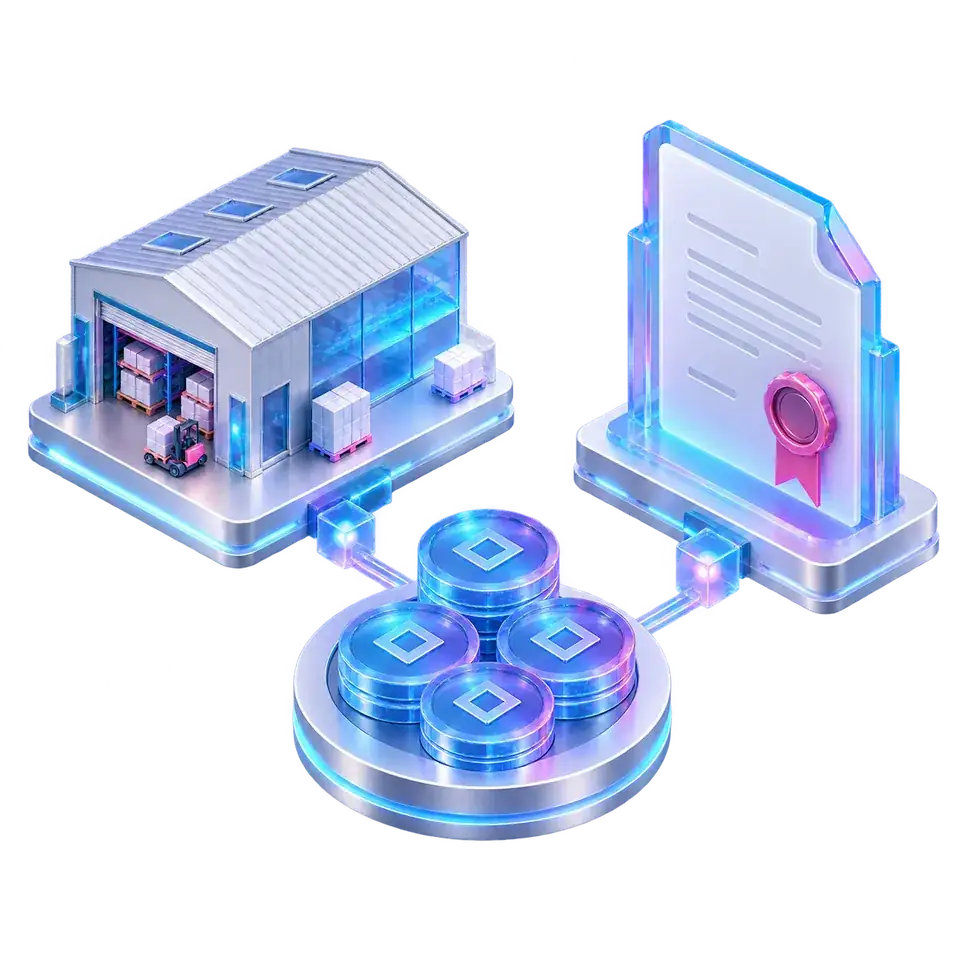
Evaluate the practical reason for a tokenized record.
Document the meaning and limitations of each unit.
Connect authoritative source records with digital events.
Track approved transfers, corrections and retirement.
Assess the coordination problem.
Define rights and record authority.
Design registry and transfer workflows.
Test corrections and asset retirement.
Pilot with reconciled source records.
Tokenization begins with a question about records and rights, not a contract template. We assess whether digital units solve the intended coordination problem, then design the relationship between the asset register, participants and transfer rules. Some use cases are better served by a conventional database.
Choose where authoritative ownership information lives.
Specify how errors are resolved without hidden history changes.
Share approved references between participating organisations.
Link units to documented product or asset information.
Implement a reviewed participant and transfer model.
We choose the implementation tools after confirming the architecture and integrations.
No. Cost, governance, privacy and enforceability can make other architectures more appropriate.
No. Custodians, registrars, advisers or servicing parties may remain essential.
Tell us what you want to build. We’ll help define the next practical step.