Utility Definition
Specify what the token enables inside the service.

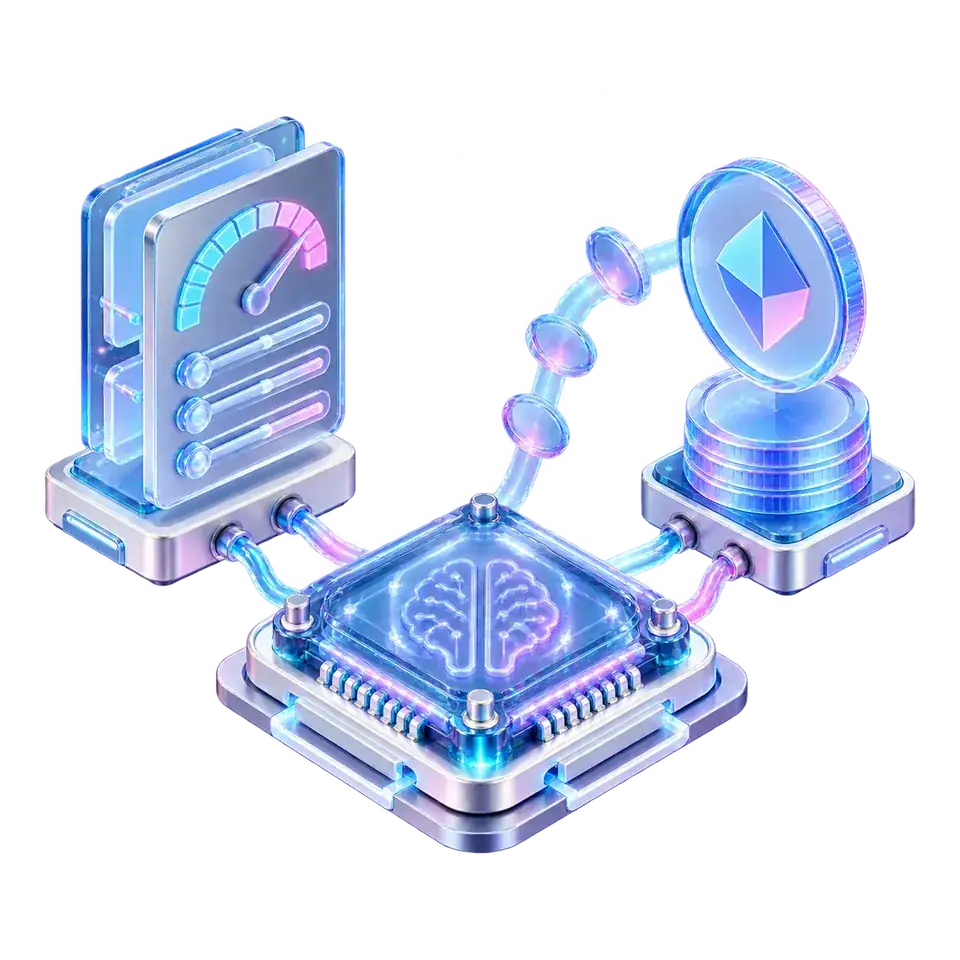
AI-linked token systems with service access rules, usage accounting, allocation controls and application integrations.
Specify what the token enables inside the service.
Reconcile service consumption with approved unit rules.
Implement issuance and administration boundaries.
Connect authorised requests to the selected model service.
We choose the implementation tools after confirming the architecture and integrations.
Adding AI to a token name does not create a useful product. We begin with the actual AI service, its users and the reason a digital unit is needed. Token permissions and service usage are designed together, while model quality and financial value remain separate questions.
Define what happens when model providers are unavailable.
Choose the authoritative source of consumed units.
Coordinate scoped access to a defined application.
Test a transparent usage-accounting model.
Connect participation rules to actual service features.
Validate the AI product need.
Specify token and usage rules.
Build metering and contract interfaces.
Test provider failures and duplicate requests.
Release with clear utility documentation.
No. Product utility, adoption and token value are separate matters.
No. Most designs separate model execution from selected verification or accounting records.
Tell us what you want to build. We’ll help define the next practical step.